
Minecraft 26.3 "Wilderness Bound" Update!
The Minecraft "Wilderness Bound" update for Java Edition 26.3 and Bedrock Edition 26.50 adds the dappled forest, poplar wood, abandoned camps, cushions, and stairs made of wool and concrete.
 English
Wilderness Bound came out on September 15, 2026, as the third Minecraft update of the year. It is version 26.3 in Java Edition and 26.50 in Bedrock Edition. The game gets an autumn forest with a new wood type, and abandoned camps with chests and maps now dot the world.
If 26.3 looks unfamiliar, blame the new versioning. Since 2026, Minecraft versions are named after the year. In Java Edition, the first number is the year and the second is the update's number within that year. The last version under the old scheme was 1.21.11.
Dappled forest
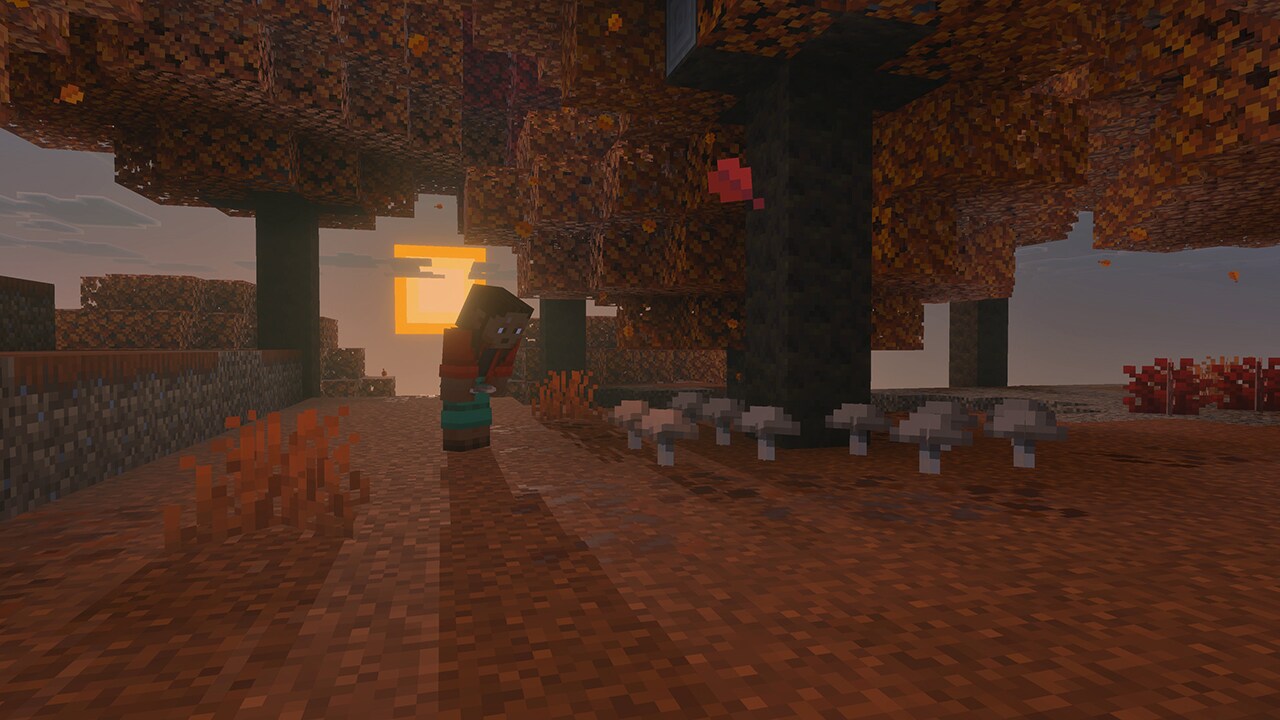
The dappled forest is a biome where it is always autumn. Poplars come in red, orange, and yellow, the grass is orange, and leaf litter covers the ground. A spruce shows up between the poplars now and then, with brown mushrooms and patches of coarse dirt underfoot.
Look for it in cool, dry regions. It often borders plains, sunflower plains, cherry groves, ice spikes, and swamps. It comes in any size, from a grove of a few trees to a forest hundreds of blocks wide.
Poplars grow much denser in Bedrock Edition than in Java Edition. It can get dark enough under the canopy for hostile mobs to spawn in the daytime.
Who lives here
Sheep graze in the dappled forest, and foxes and rabbits run around. Cows, pigs, and chickens are here too, in their cold variants.
Poplar
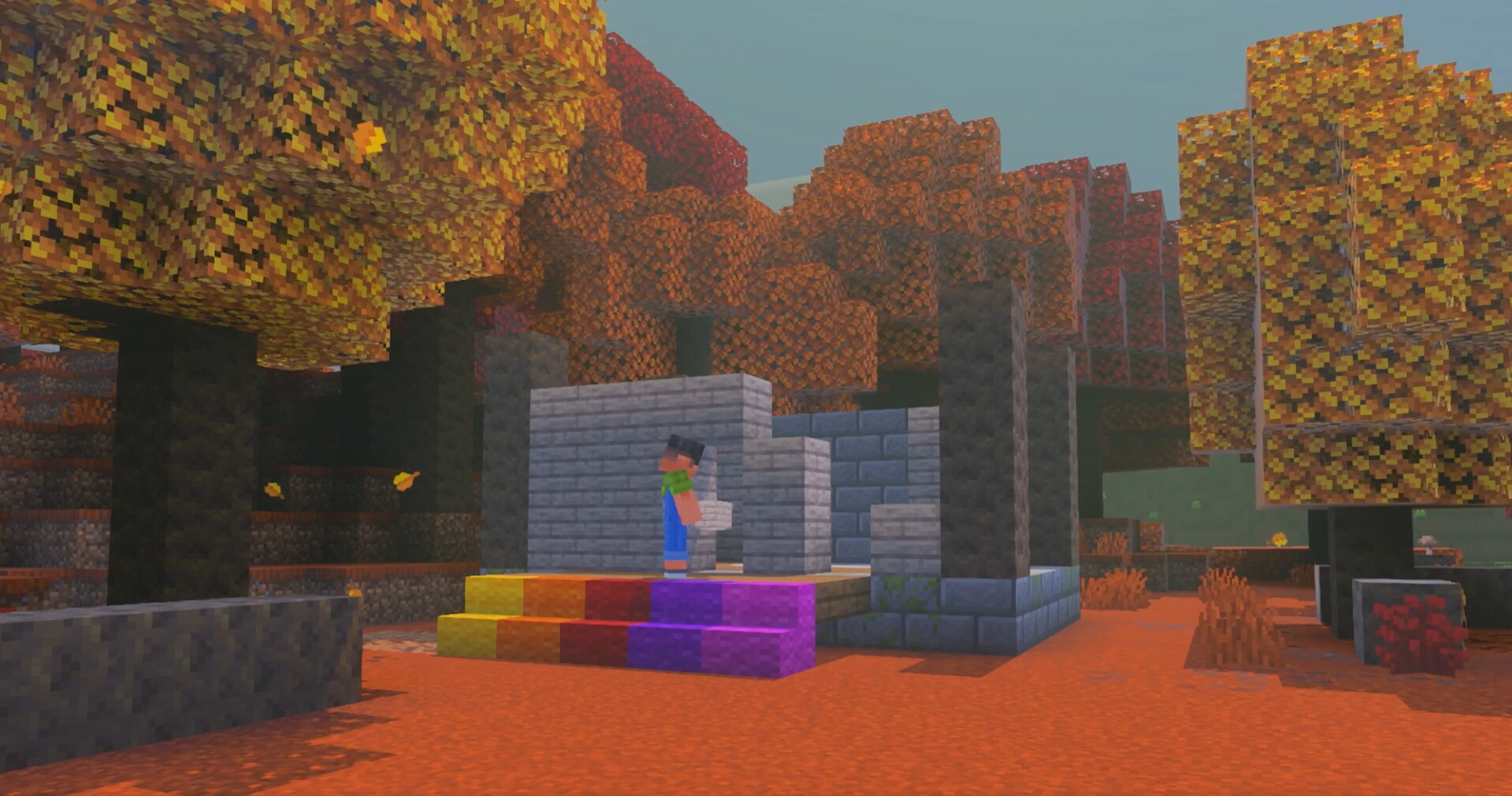
The poplar is the biome's signature tree. It has a single trunk and a big, full canopy in one of three colors.
- The game picks the leaf color at random when it generates the world.
- Leaves of the same color fall from the canopy.
- Shelf mushrooms grow on the trunks, and leaf litter covers the ground around them.
- Fallen poplars generate more often than any other kind of fallen tree. Brown mushrooms and shelf mushrooms grow on them.
- Poplar leaves drop a poplar sapling. You can't tell what color the tree will be, since the game picks one of the three again.
- A sapling needs a light level of at least 9 and free space above it. Bone meal
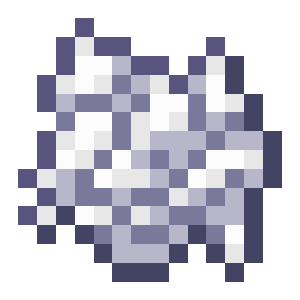 speeds up growth.
Red shrub
- Grows in small patches in the dappled forest.
- Keeps its color. Most plants take on the tint of their biome, but the shrub stays red anywhere.
- Use bone meal on a shrub and another one may grow next to it.
- Works in a composter
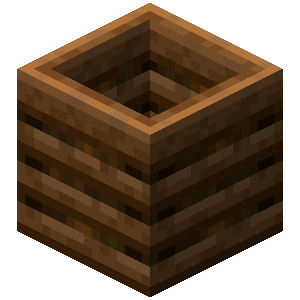 .
.
Shelf mushroom
The shelf mushroom is a fungus that grows right on poplar trunks, both standing and fallen.
- It comes in a small and a large size. Bone meal turns a small one into a large one, and it never grows on its own.
- A large shelf mushroom drops two mushrooms.
- It attaches to any full side of a block. Unlike red and brown mushrooms, it doesn't care how much light is around.
- You can bounce on a shelf mushroom, like on a bed. You still take fall damage, though slightly less than half the usual amount.
- It goes into mushroom stew
 , suspicious stew
  , and rabbit stew
  .
. - The wandering trader sells it, and spare mushrooms can go into a composter.
Poplar wood
Poplar gives you a full set of wooden blocks, so you can build a whole house out of the new material.
- Poplar log and stripped poplar log
- Poplar wood and stripped poplar wood
- Poplar planks, stairs, and slab
- Poplar fence and fence gate
- Poplar door and trapdoor
- Poplar button and pressure plate
- Poplar sign and hanging sign
- Poplar shelf
- Poplar boat and poplar boat with chest
If the dappled forest is far away, check with a wandering trader. They sell poplar logs and saplings.
Abandoned camp
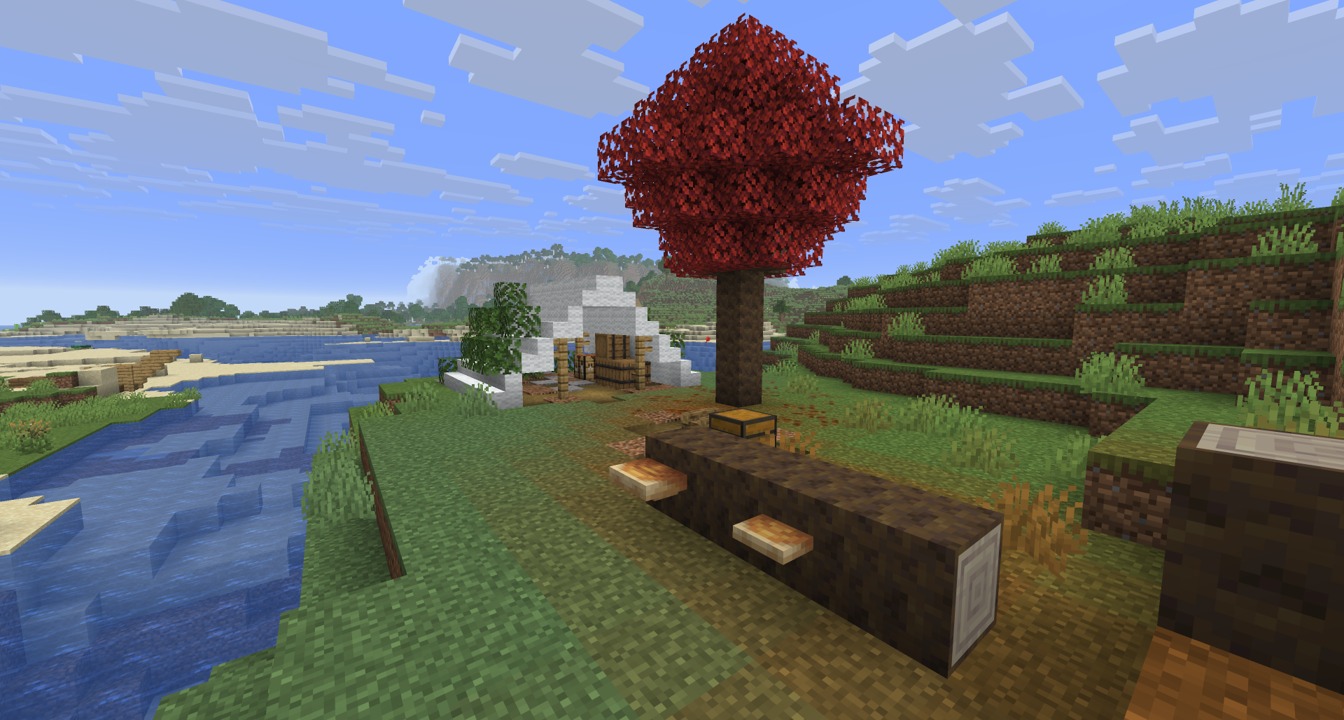
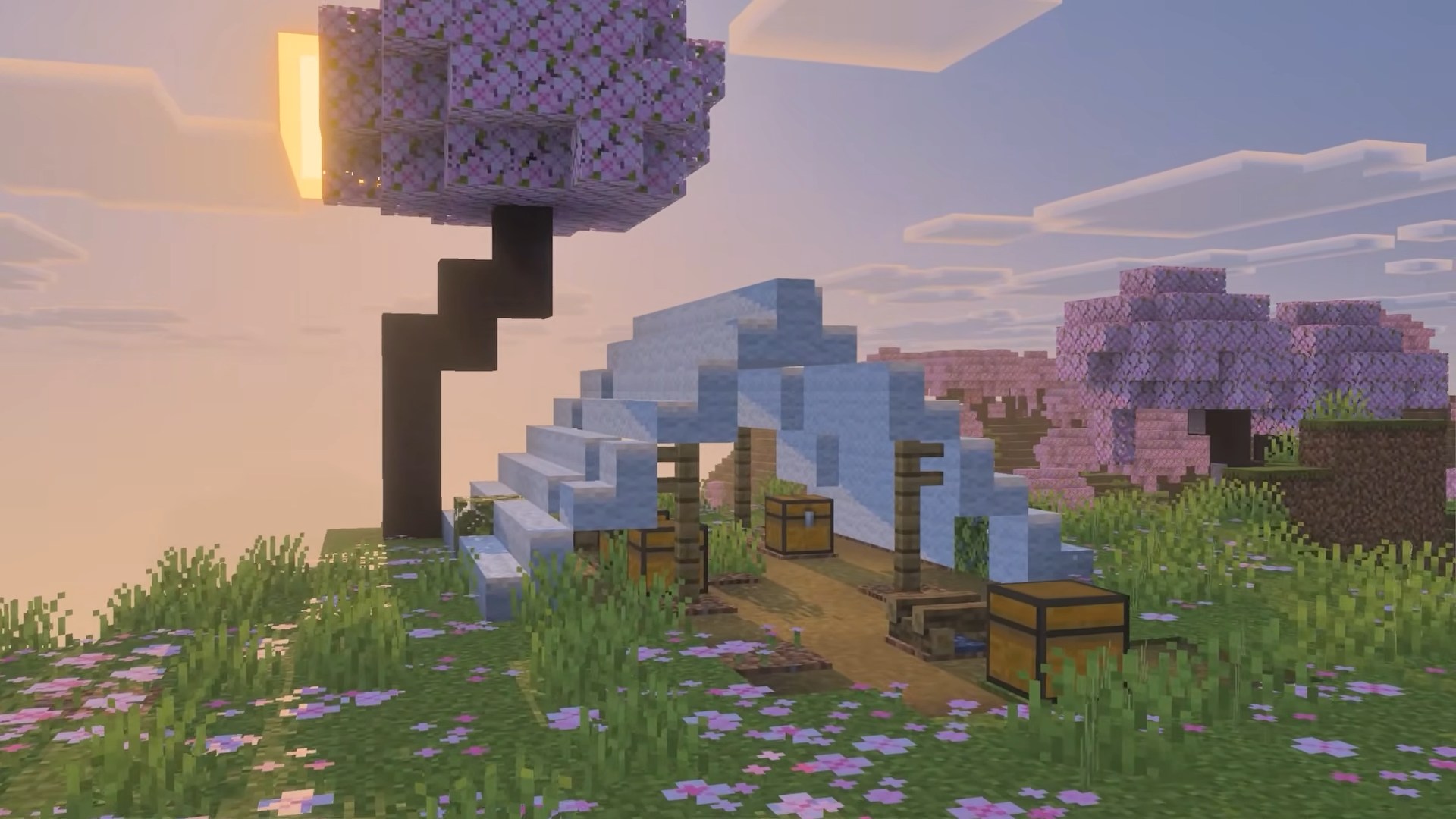
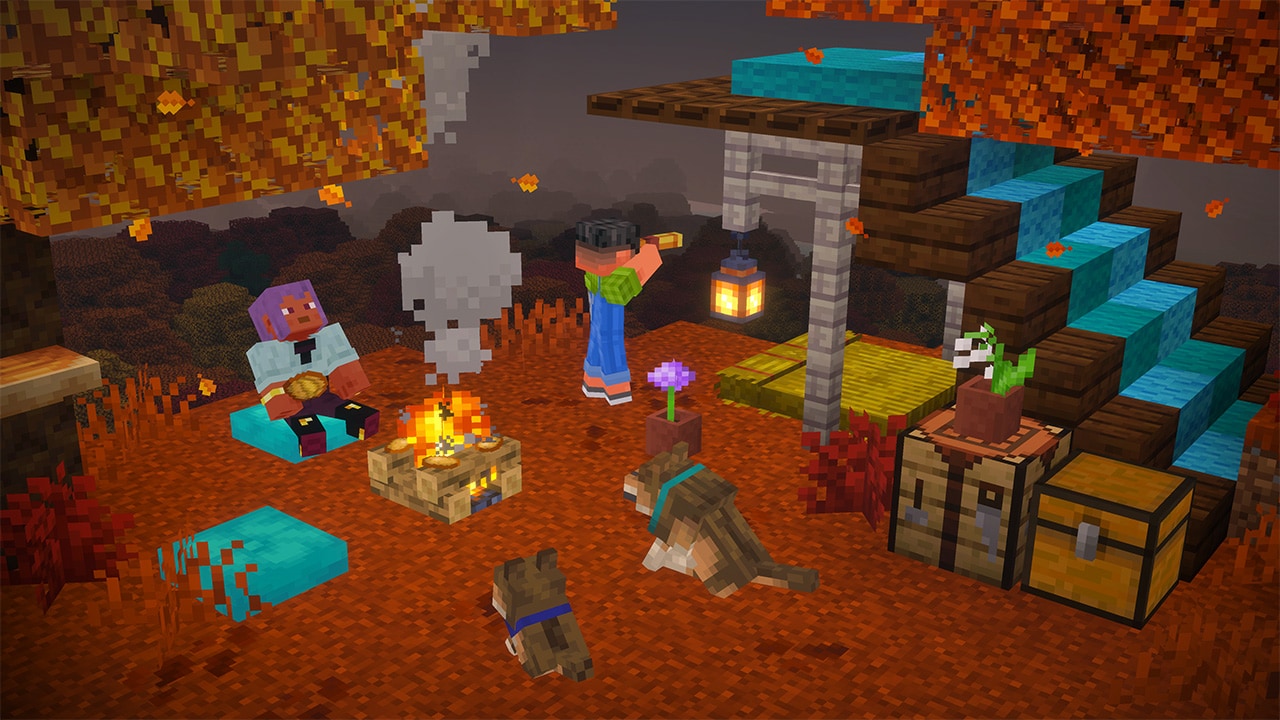
The tent is built from white wool stairs, with chests, barrels, straw beds, and cushions inside and an unlit campfire out front.
You will rarely find two camps that look the same. Some of the stairs may be replaced with cobwebs and leaves, a tree or a small crop farm may sit nearby, and the fences that hold the tent up depend on the biome. In a pale garden, for example, they are pale oak fences. The tent has 10 variants in each of the 18 biomes and the campsite has 49 per biome, for 8,820 combinations in total.
Where to look
Camps generate on the surface of the Overworld in 18 biomes.
- Forest, birch forest, old growth birch forest, flower forest, windswept forest, and dappled forest
- Taiga, snowy taiga, old growth spruce taiga, and old growth pine taiga
- Sparse jungle and bamboo jungle
- Meadow, cherry grove, swamp, savanna, wooded badlands, and pale garden
They don't turn up often. The game splits the world into regions of 37×37 chunks and makes one attempt to place a camp in each. If the spot lands in the wrong biome, that region stays empty.
What's inside
- Barrels
 hold basic supplies and sometimes cobwebs.
 - Common chests
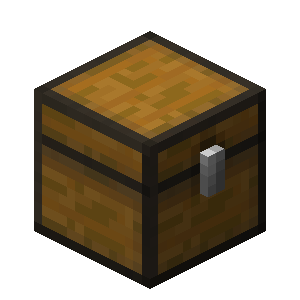 can have copper weapons and armor, buckets, compasses, maps, and gunpowder.
 - The best loot sits in a hidden stash. It is an oxidized copper chest that shows up rarely and is often buried under other blocks. Inside you can find iron weapons and armor, diamonds, gold, and potions.
Camp maps 
Camps are linked to each other by maps. A common chest may hold an abandoned camp map that leads to the next campsite in one of eight biomes. Those are bamboo jungle, cherry grove, birch forest, dappled forest, flower forest, pale garden, swamp, and windswept forest.
The hidden stash can hold maps to other structures. They lead to the ancient city, mineshaft, desert pyramid, and warm ocean ruins, as well as the jungle pyramid, swamp hut, and trial chambers.
Straw bed
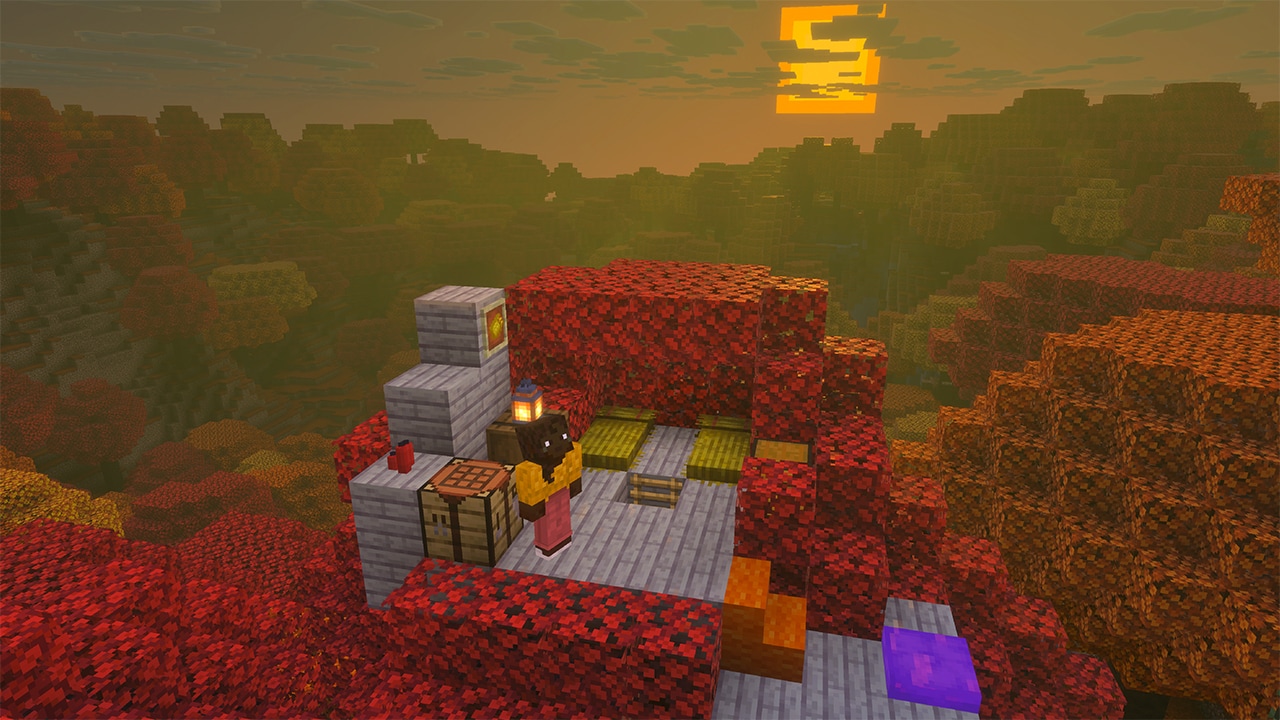
The straw bed is made for travel. You can sleep through the night on it and your spawn point stays at home. A regular bed would have moved it to the new spot.
- 3 hay bales
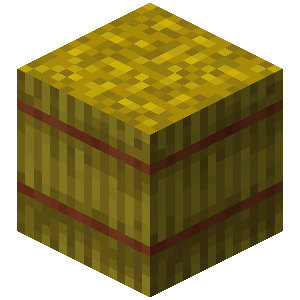 make 4 beds.
 - They stack up to 16.
- The bed is single-use. It disappears in the morning, or the moment you get up early.
- Sleeping in it works like normal sleep. The weather clears and phantoms stay away for three in-game days.
- You can't sleep in the Nether or the End. The bed just breaks, but at least it doesn't explode.
- Villagers don't claim straw beds or sleep in them.
- A hoe breaks it fastest.
- You can find them already placed in abandoned camps.
Wool and concrete stairs and slabs
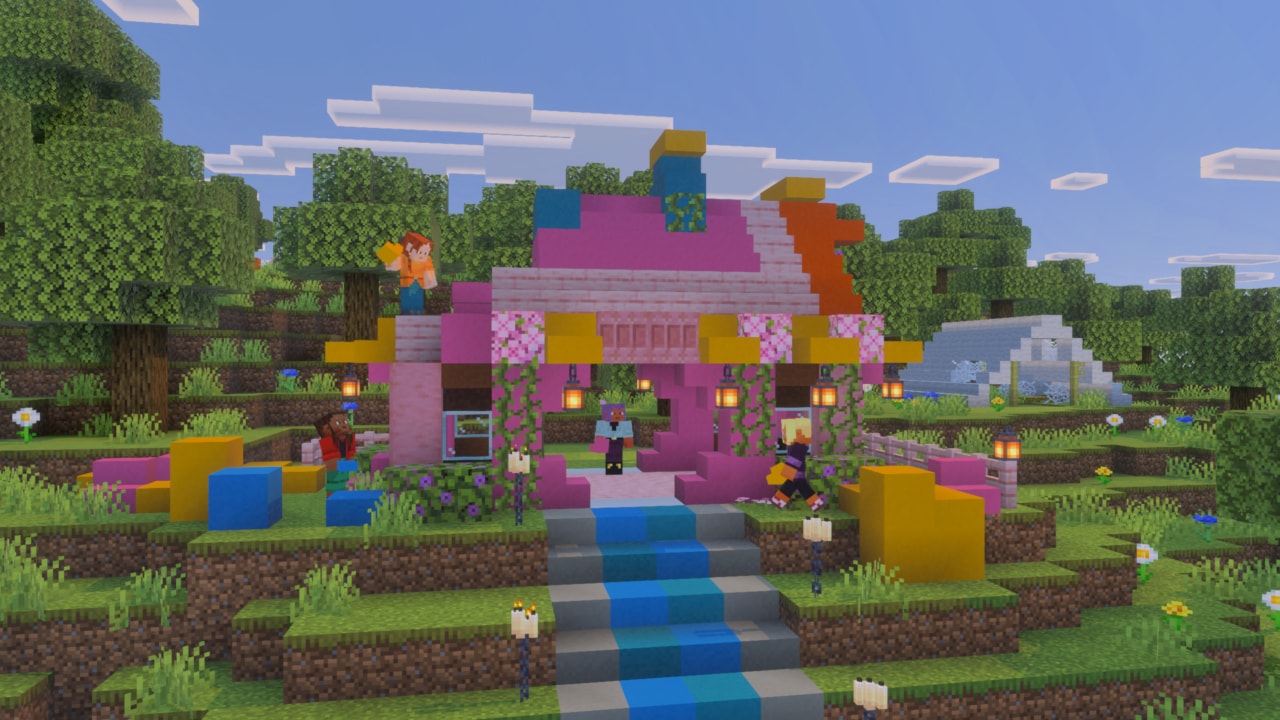
Builders get two new block sets. Wool and concrete can now be turned into stairs and slabs in all 16 colors.
Wool stairs and slabs
- 6 wool blocks
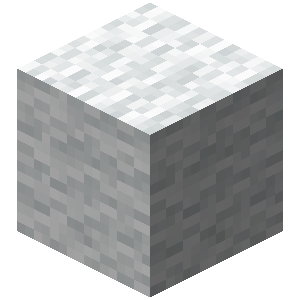 make 4 stairs, and 3 blocks make 6 slabs.
 - You can re-dye them, just like regular wool.
- A sculk sensor doesn't notice walking, sprinting, or jumping on them. It doesn't hear these blocks being placed or broken either.
- They won't shield a sensor from sound. Vibrations pass through the stairs and slabs, so you still need a full wool block for that.
- They burn easily, and shears
 break them fastest.
Concrete stairs and slabs
- At a crafting table, 6 concrete blocks
 make 4 stairs, and 3 blocks make 6 slabs.
 - At a stonecutter
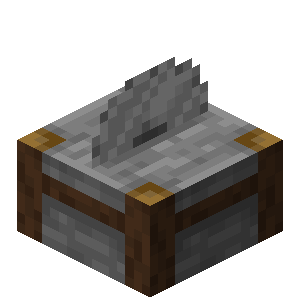 , one concrete block becomes one stair or two slabs.
 - Mine them with a pickaxe, or nothing drops.
Cushions
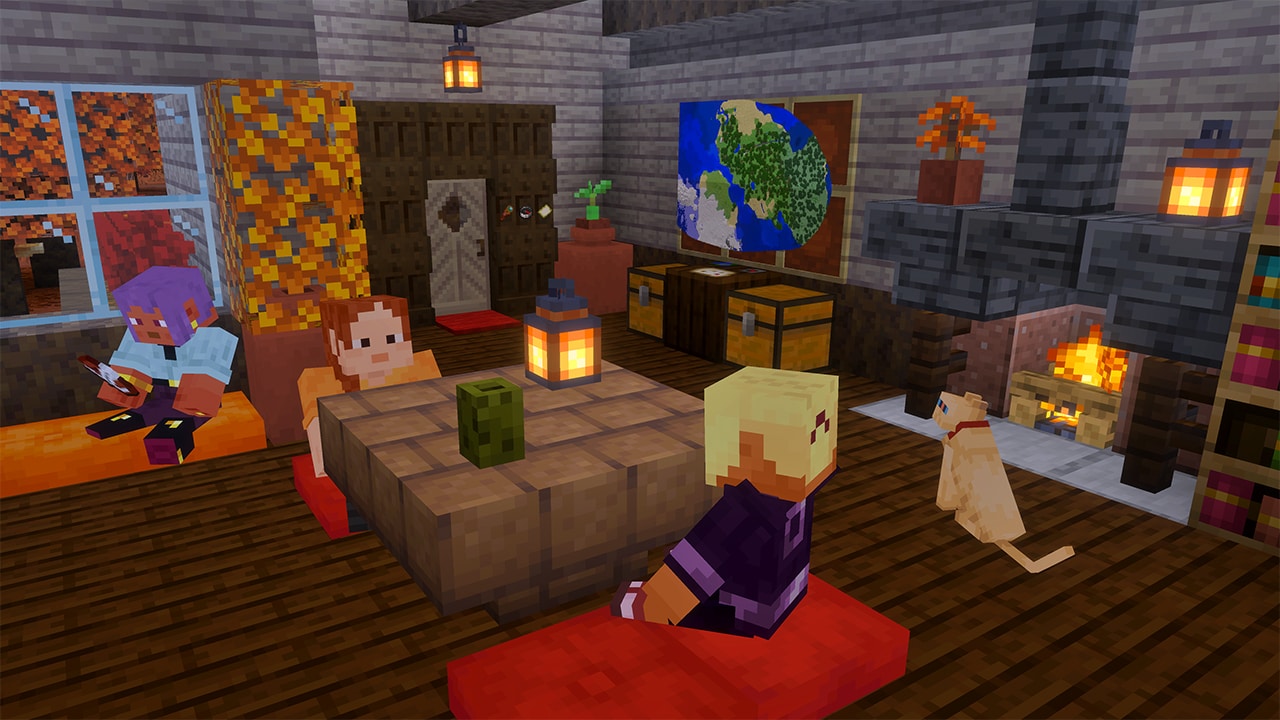
You can sit on a cushion. To the game it is an entity rather than a block, like a painting or an item frame.
- A cushion is crafted from 3 wool slabs of the same color.
- There are 16 colors, and you can re-dye a finished cushion.
- They stack up to 16.
- It goes on any flat surface, including slabs, stairs, and snow layers.
- To sit down, right-click the cushion.
- It breaks from any hit or projectile, when the block under it is removed, or when a piston pushes it. The cushion always drops as an item.
- It has no collision and can share a space with other objects, but not with another cushion.
- While you sit, pistons and knockback can't move you, and portals won't take you.
- Unlike wool, a cushion doesn't dampen vibrations. A sculk sensor hears you sitting down and getting up.
- In abandoned camps, cushions usually sit within one or two blocks of the campfire.
Reworked maps
Explorer maps
The maps that lead to structures got a rework.
- Each of these maps is now its own item with its own icon. They all used to be regular filled maps.
- Old maps in your existing worlds convert to the new items on load.
- Village maps now have five different icons, one each for plains, desert, savanna, taiga, and snowy villages.
- Explorer maps and buried treasure maps can no longer be zoomed out. Neither a crafting table nor a cartography table
 will do it.
 - You can still copy them at a crafting table.
- The player marker on a map now always shows which way you are facing.
- The empty map
 and the filled map have new icons.
 - Explorer maps are not in the Creative inventory.
Five maps got new names.
- Jungle Explorer Map → Jungle Pyramid Map
- Ocean Explorer Map → Ocean Monument Map
- Swamp Explorer Map → Swamp Hut Map
- Trial Explorer Map → Buried Trial Chambers Map
- Woodland Explorer Map → Woodland Mansion Map
Advancements
There are no new advancements in 26.3, but an old one got harder. "Adventuring Time" now requires a visit to the dappled forest as well.
Other changes
Mushroom stew and suspicious stew
- Can be made with any two mushrooms. It used to take exactly one red and one brown.
Wandering trader
- Sells poplar logs, poplar saplings, and shelf mushrooms.
Hay bale
- The side texture was redrawn. The red twine was moved so it lines up with the straw bed's texture.
Spruce leaves 
- In Java Edition, spruce leaves no longer drop falling leaf particles.
Sculk sensor 
- Now detects ice and snow melting.
Chorus fruit 
- After a teleport, particles show which direction you were moved in.
Shield 
- With a shield in one hand and a hoe or shovel in the other, right-click raises the shield first. Crouch to till soil or make a path.
Endermen and shulkers
- An enderman riding something (a boat, a minecart, or another mob) takes damage from projectiles and doesn't try to teleport away from environmental damage.
- Endermen and shulkers can no longer teleport onto bedrock.
Armadillo
- No longer rolls up when it is submerged in a liquid.
Paintings 
- A painting with a custom name shows that name when you look at it in the world.
Spectator mode
- Spectators can go through portals.
Trading
- When a villager levels up, the new trades appear right away, even with the trading screen open.
Creative inventory
- Minerals and their blocks were reordered. The ones that don't craft into equipment come first, followed by the ones that do.
Interface and settings in Java Edition
World Options
The World Options button moved to the pause menu and took the place of the Open to LAN button. The screen is split into General and Multiplayer.
- General has a new Personal Game Mode option. It changes your own game mode in this world, like the
/gamemodecommand or F3+F4. - The Game Mode button was renamed to Default Game Mode.
- Multiplayer is where you turn on LAN access, set the port, decide whether guests can use commands, and choose whether their game mode is forced when they join.
Display and controls
- Borderless Fullscreen is now the default fullscreen mode.
- Switching between it and Exclusive Fullscreen no longer needs a restart.
- Key binds now follow the physical position of a key rather than the keyboard layout.
- The Raw Input mouse setting was removed.
- The minimum window size is now 320×240 pixels.
- On Linux, the game uses Wayland natively when it is available.
- Window management and input now run on SDL3 instead of GLFW.
Debug screen
- The debug overlay has its own GUI scale, separate from the rest of the interface. The setting opens with F3+F6.
- The overlay now shows the display refresh rate and the player's speed in blocks per tick.
Main menu and graphics
- The main menu has a new panorama with a dappled forest and an abandoned camp.
- Improved Transparency moved to a new algorithm that should handle translucent blocks better.
For servers and map makers
- In
server.properties, thewhite-listproperty is now on by default. A fresh server left unconfigured will only let in players on the whitelist. - The
/publishcommand lost its game mode argument. Set the default mode with/defaultgamemodeor in World Options. - The new
/computecommand evaluates a number provider. - The new
/posteffectcommand applies a post-processing shader from a resource pack to a player's screen. - The
/itemcommand gainedfillandoverridesub-commands. - Potion brewing recipes are now data-driven, so data packs can add and change them.
- The data pack format is now 121.0 and the resource pack format is 97.1.
The next update, 26.4, is already in testing. Its first snapshot came out on September 22, 2026.
Download JustLauncher
Discussion
No comments yet
Be the first to leave one