
Minecraft 1.20 "Trails & Tales" Update!
Sniffers, archaeology, new journeys and stories to tell. The full rundown of Minecraft 1.20 "Trails & Tales" for Java Edition
Archaeology
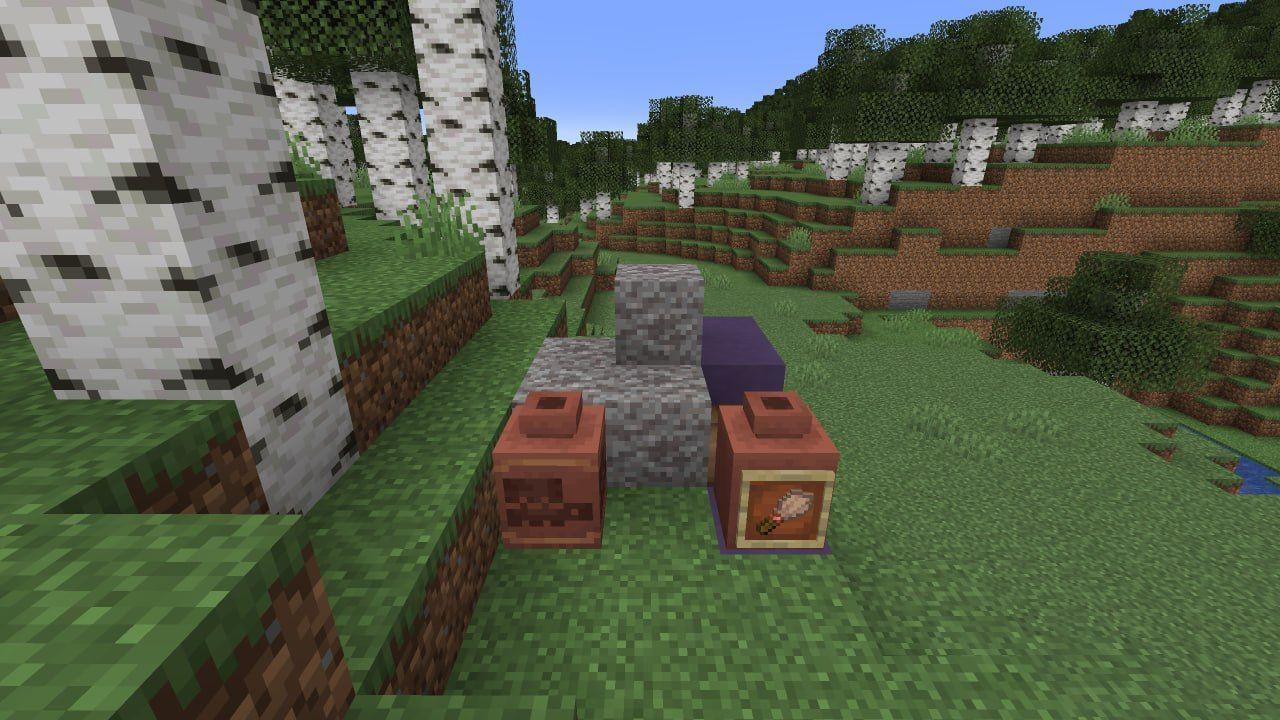
A new game mechanic that lets you find historical artifacts inside suspicious sand or gravel. To dig up artifacts, you need to interact with suspicious sand or gravel using a brush. These blocks look like regular sand and gravel from the outside, but have a rougher texture. When you use an archaeology brush, the block you're interacting with starts to crack. If the suspicious block generated naturally, the item you get will appear gradually. Suspicious sand or gravel can't be mined even with a Silk Touch-enchanted tool — in that case you'll just get regular sand or gravel.
Brush 
- Can be crafted from a feather, a copper ingot, and a stick.
- Used to search for artifacts.
Suspicious Gravel 
- Generates in cold ocean ruins and trail ruins.
- Brushing suspicious gravel lets you extract items.
Suspicious Sand 
- Generates in desert temples, desert wells, and underwater ruins.
- Brushing suspicious sand lets you extract items.
New structures
A new structure was added to the game — trail ruins. It can be found underwater, underground, and on the surface. It generates in snowy, old-growth, and regular taiga, as well as old-growth birch forests and jungles, and in aquatic biomes. Old structures such as desert pyramids, desert wells, and warm and cold ocean ruins got a small loot update along with slightly changed generation featuring suspicious sand/gravel. Here's the full list of loot you can get from these structures:
- In desert pyramids, suspicious sand can contain a pottery sherd, TNT, gunpowder, an emerald, or a diamond.
- In desert wells, suspicious sand can contain a pottery sherd, a brick, an emerald, a stick, or suspicious stew.
- In warm ocean ruins, suspicious sand can contain a pottery sherd, a sniffer egg, an iron axe, an emerald, wheat, a wooden hoe, coal, or a nugget of gold.
- In cold ocean ruins, suspicious gravel can contain a pottery sherd, an iron axe, an emerald, wheat, a wooden hoe, coal, or a gold nugget.
- In trail ruins, suspicious gravel can contain a pottery sherd, an emerald, wheat, clay, a brick, dyes, a dyed candle, a stained glass pane, a gold nugget, coal, wheat seeds, beetroot seeds, a dead bush, a flower pot, string, a lead, the "Relic" music disc, or an armor trim.
Cherry Grove
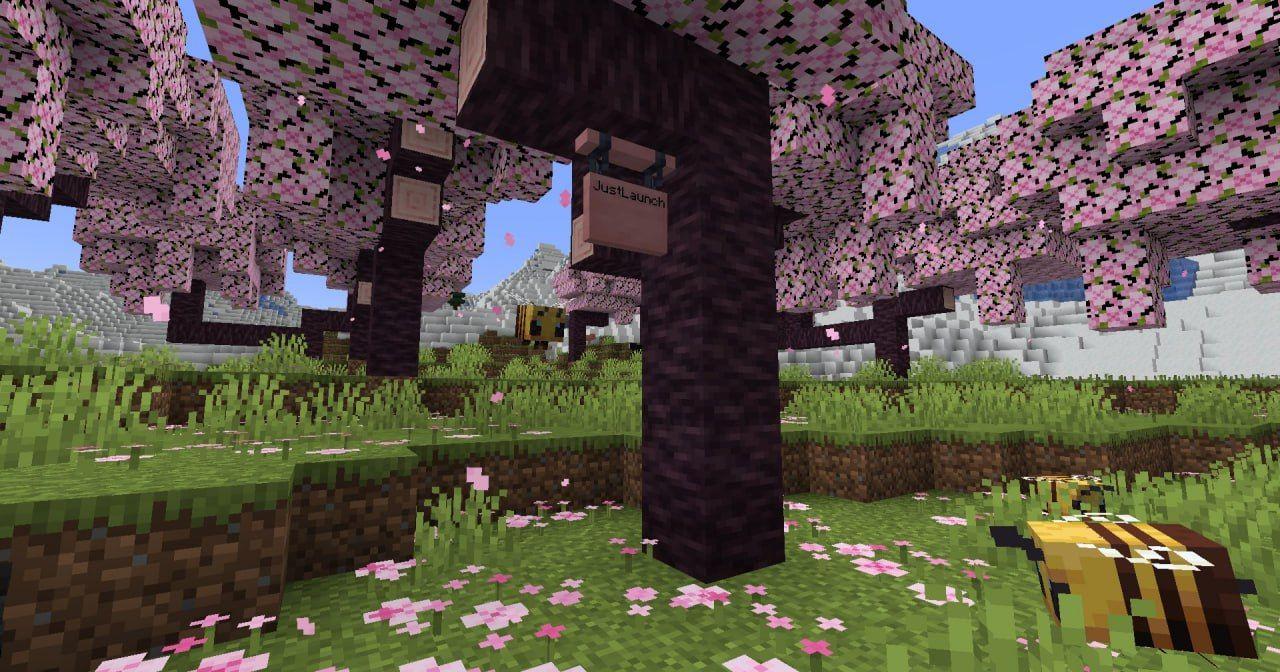
Cherry groves are a unique biome where cherry trees form a dense canopy that sheds falling petals. Tall grass, bright pink flowers on the trees, and wildflowers like dandelions and poppies give this place its special charm.
What can you find in this biome?
The main inhabitants of this biome are sheep and pigs, with some chance of rabbits appearing too. Bee nests with bees quite often appear on cherry trees.
Pink Petals 
- Placed similar to sea pickles, up to 4 per block.
- Placement direction depends on the player's position.
- Can be propagated with bone meal.
- Can be used to breed bees.
- Suitable for bee pollination.
Cherry Log 
- Wood with a soft pink color.
- Can be made into planks and other wooden items, like other wood types.
- Has a stripped variant.
Cherry Leaves 
- Drop pink particles that look like petals.
Cherry Sapling 
- Drops from cherry leaves.
- Used to grow cherry trees.
Cherry Signs 

- Crafted from cherry planks.
- Also has a hanging variant.
And if you don't know what to build with the new blocks, or are struggling to decorate an already beautiful location, you can find a post with a house showcase here
Sniffer
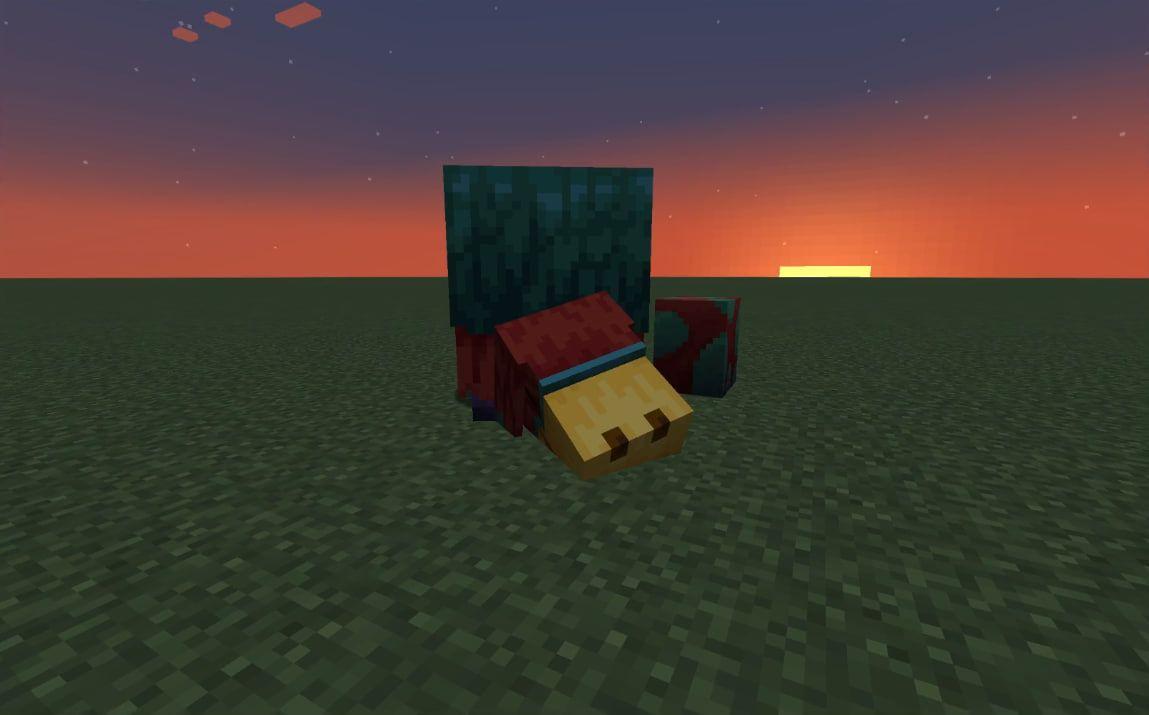
The sniffer is a friendly mob that will help you search for ancient plants using its nose. Unfortunately, it doesn't appear during regular world generation, so you'll have to find sniffer eggs in suspicious sand near ocean ruins and raise it into an indispensable helper.
Breeding
Once you've found an egg, there are 2 ways to hatch it:
- Place it on any solid block, after which the sniffer's baby will hatch within 20 minutes.
- Place the egg on a moss block, which will halve the egg stage's duration.
After that, over 40 minutes of real time — which can be shortened using torchflower seeds — the baby will grow up and turn into an indispensable hunter of ancient plants.
Everyday use
As mentioned above, this adorable creature isn't just there to show off its nose to the player — it can also serve as an indispensable hunting companion, capable of finding ancient plants from any ruins.
Camel
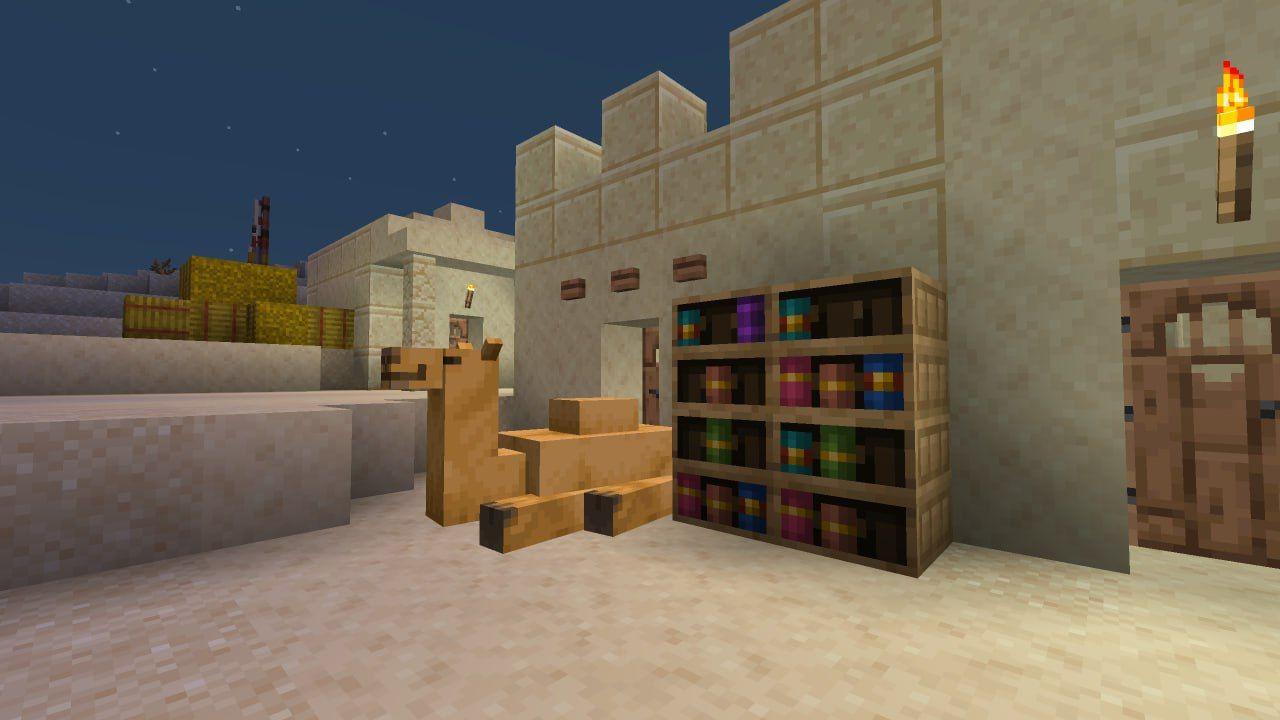
The camel is a new passive mob that can become your faithful travel companion, since you can put a saddle on it. Camels spawn in desert villages during world generation and don't respawn if killed — so take good care of them. They can sit for two to seven seconds before standing up. When they take damage, they stand up and run away.
Breeding
A camel will follow a player holding a cactus, as long as the distance doesn't exceed 6 blocks. To breed camels, you need to find two adults and feed them cactus, after which a baby camel will appear. The breeding cooldown is 5 minutes.
Everyday use
Camels are great for traveling around the Minecraft world. To ride a camel you only need a saddle, and you can also lead it around with a lead. Despite having only 1 hump, a camel can carry two riders. This desert animal has long legs that let it jump up to 12 blocks in distance on flat ground. But be careful around water, because if you swim into a body of water deeper than 3 blocks, you'll automatically dismount.
Torchflower
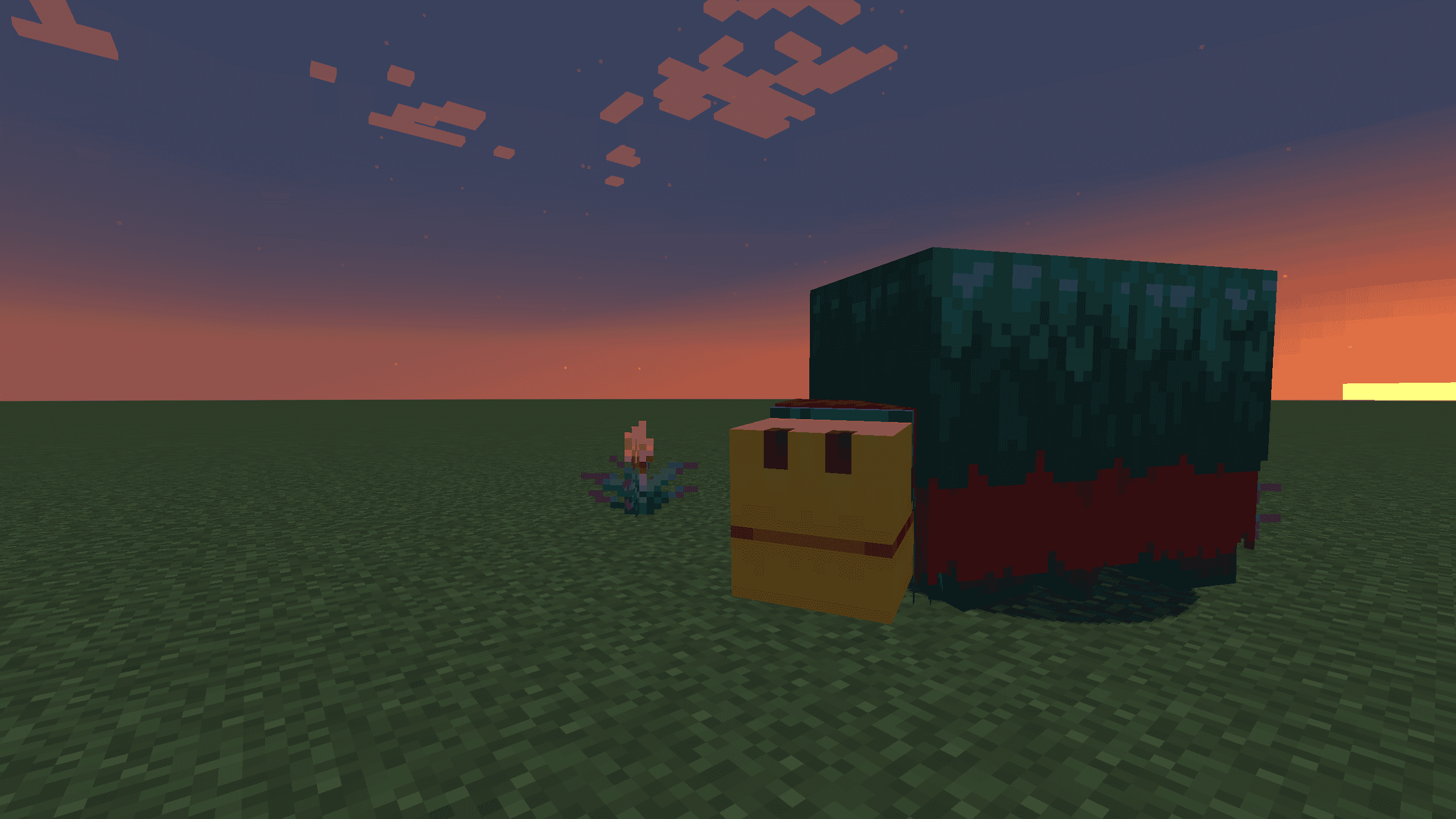
This is an ancient plant with a red-orange bud and green petals, with small purple leaflets visible along their edges. Unfortunately, it doesn't appear during regular world generation — only a sniffer can help you obtain it. At a random moment, it will start searching, and after a while begin digging in the ground, after which you'll have a chance to get torchflower seeds.
Growing
Torchflower seeds can only be planted on farmland. After planting, there are three growth stages, which can be sped up with bone meal. If you break a torchflower while it's growing, only its seeds will drop. If you break an already fully grown plant, you won't get any drops at all. So the torchflower isn't a crop and can't be "bred" by the player (like wheat, for example) — increasing your seed supply is only possible through sniffers.
Everyday use
Used to craft orange dye, to breed sniffers, and in crafting suspicious stew with the Night Vision effect for 4 seconds. It can also be used decoratively, for example, planted in a flower pot.
Pitcher Plant
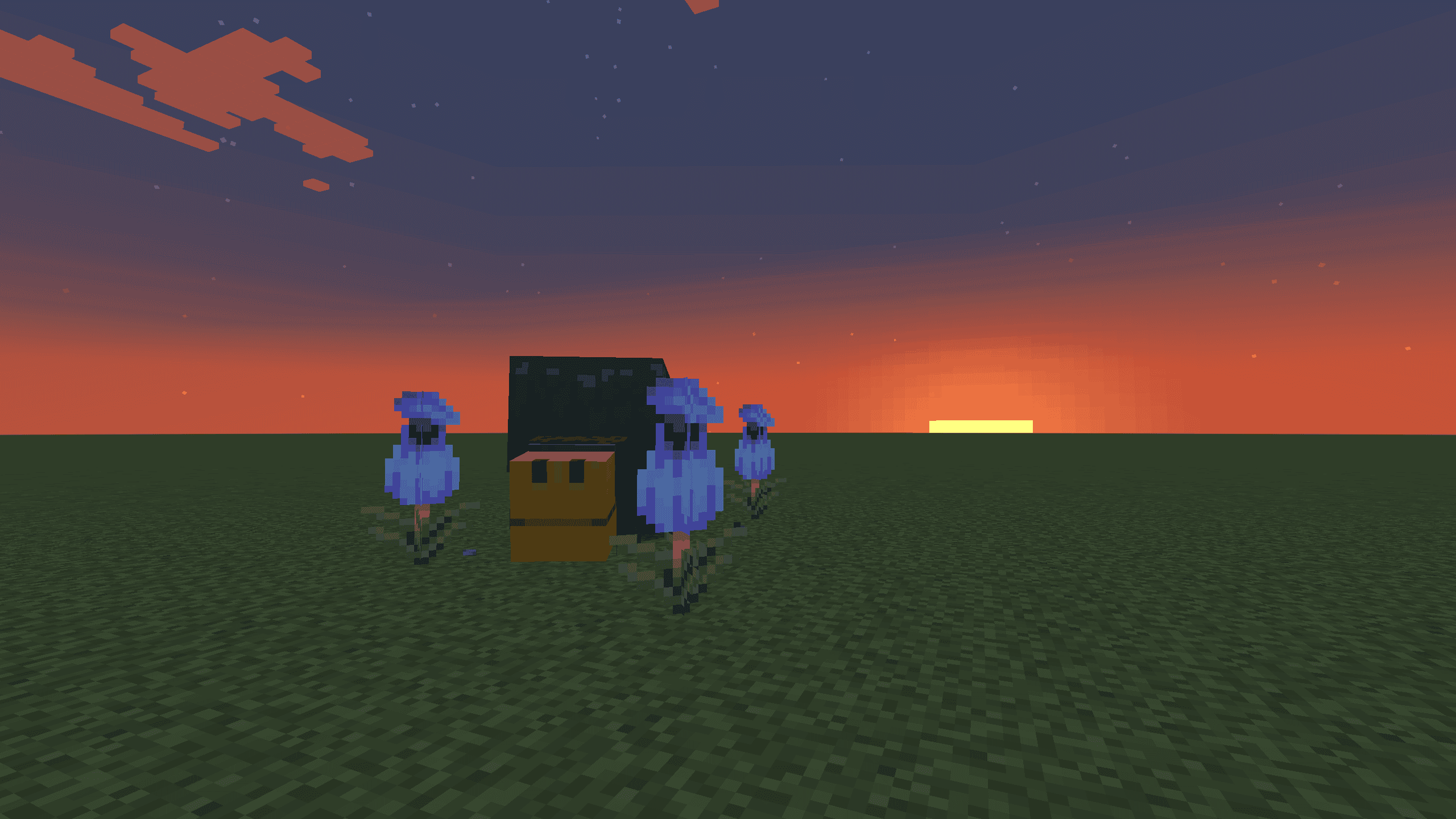
This is an ancient plant with a blue bud and green petals. It grows up to two blocks tall and, like the torchflower, doesn't appear during regular world generation — a sniffer will help you find this plant.
Growing
Pitcher plant seeds can only be planted on farmland. After planting, the seeds go through three growth stages, which can be sped up with bone meal. Unlike the torchflower, the pitcher plant has no loot — if you break an already grown plant, the player gets nothing. However, if the plant is still growing, you can get one seed from it. You can only increase the amount using a sniffer.
Everyday use
A grown pitcher plant can be used to obtain cyan dye or used decoratively, for example planted in a flower pot. Its pods also function as wheat seeds, meaning they're suitable for breeding chickens and taming parrots.
Smithing Table
The smithing table is the toolsmith's workstation, which can be crafted or found in a village. It used to be used by the player only to upgrade diamond armor into netherite armor, and now it's also used to apply trims to armor using templates, which can't be crafted from scratch but can be duplicated.
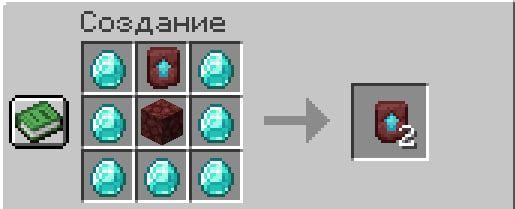
New netherite crafting
Now, to craft netherite armor you need not only a netherite ingot but also a smithing template. Crafting netherite armor or tools now looks like this:
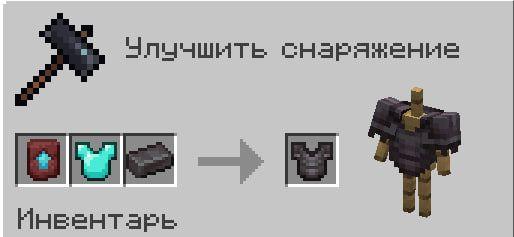
Armor Decoration
The smithing table's main update is the ability to decorate armor. To decorate armor you'll need a smithing table, a template, and an ingot or crystal. In total, the update added 17 armor trim templates to the game:
- Smithing Template

Can be found in Bastion Remnant treasure rooms with a 100% chance, and in all other bastion chests with a 10% chance - Smithing Template, "Sentry" trim

Can be found in Bastion Remnant treasure rooms with a 100% chance, and in all other bastion chests with a 10% chance - Smithing Template, "Vex" trim

Can be found at pillager outposts with a 25% chance (2 at a time) - Smithing Template, "Wild" trim

Can be found in jungle temples with a 33.3% chance (2 at a time); - Smithing Template, "Coast" trim

Can be found in shipwrecks with a 16.7% chance (2 at a time); - Smithing Template, "Dune" trim

Can be found in desert temples with a 14.3% chance (2 at a time); - Smithing Template, "Wayfinder" trim

Can only be obtained by digging up suspicious gravel in trail ruins, with an 8.3% chance; - Smithing Template, "Raiser" trim

Can only be obtained by digging up suspicious gravel in trail ruins, with an 8.3% chance; - Smithing Template, "Shaper" trim

Can only be obtained by digging up suspicious gravel in trail ruins, with an 8.3% chance; - Smithing Template, "Host" trim

Can only be obtained by digging up suspicious gravel in trail ruins, with an 8.3% chance; - Smithing Template, "Ward" trim

Can be found in an ancient city with a 5% chance; - Smithing Template, "Silence" trim

Can be found in an ancient city with a 1.25% chance; - Smithing Template, "Tide" trim

Can be obtained with a 20% chance by defeating an elder guardian; - Smithing Template, "Snout" trim

Can be found in bastion remnants with an 8.3% chance; - Smithing Template, "Rib" trim

Can be found in a Nether fortress with a 6.7% chance; - Smithing Template, "Eye" trim

Can be found in a stronghold, in the library (with a 100% chance) and in the altar (with a 10% chance); - Smithing Template, "Spire" trim

Can be found in an End city with a 6.7% chance;
Templates can be combined with various valuable resources:
- Copper Ingot

- Iron Ingot

- Gold Ingot

- Netherite Ingot

- Quartz

- Amethyst Shard

- Lapis Lazuli

- Redstone Dust

- Diamond

- Emerald

Decorated Pot 
- Crafted from bricks and/or any pottery sherds (can be combined with each other).
- The arrangement of items during crafting determines its pattern on the side faces.
- Faces made from bricks have no image.
- Breaks instantly by hand and drops as a block. If broken with any tool, the items it was crafted from will drop instead.
Bamboo Block 
- Crafted from 9 bamboo, similar to logs, and has a stripped variant.
- Can be used as fuel, smelting 1.5 items per block.
Bamboo Planks 
- You get 2 planks from 1 block of regular or stripped bamboo block.
- Can be used to craft slabs and stairs.
- Smelts 1.5 items per plank
Bamboo Mosaic 
- Crafted from 2 bamboo slabs.
- Can be used to craft slabs and stairs.
Bamboo Raft 
- Its model sits slightly lower, but its hitbox is no different from a boat's.
- Has a chest variant.

Chiseled Bookshelf 
- Crafted from 6 planks and 3 slabs of any wood type.
- Can store up to six books, enchanted books, written books, and books and quills.
- Can be used with a comparator to detect the last slot that was interacted with.
- Can be used with a hopper. Insertion and removal starts from the first slot.
Hanging Sign 
- Crafted from 6 stripped logs of any wood type and 2 chains.
- Comes in 11 variants across all wood types.
- Has the same mechanics as a regular sign.
- Holds slightly less text (10 characters per line) than a regular sign (15 characters per line).
Calibrated Sculk Sensor 
- Can be crafted using 3 amethyst shards and 1 sculk sensor
- Clearly distinguishable from a regular sculk sensor thanks to the amethyst shard texture built into it.
- Can be mined with any tool, just like a regular sculk sensor.
- A hoe is used for faster mining.
- Unlike a regular sculk sensor, it doesn't emit a redstone signal from the side marked with amethyst.
- If you connect a lectern to a calibrated sculk sensor with a redstone comparator, on the side marked with amethyst, the open page of a book on the lectern will act as the vibration frequency picked up by that sculk sensor (from 1 — to 15).
- A dispenser or dropper with the necessary number of items inside can be used instead of a lectern (for example, 42 items is equivalent to page 3 of a book on a lectern).
- The calibrated sculk sensor can detect vibrations within a 16-block radius (a regular sculk sensor's detection radius is 8 blocks).
New Advancements
-

Get a sniffer egg.
-

Feed a sniffer.
-

Plant any plant obtained from a sniffer.
-

Brush a suspicious block to get a pottery sherd.
Other changes
Amethyst Blocks 
- When placed above amethyst blocks, a sculk sensor's detected vibration signal is transmitted through them without losing frequency. This creates an effect known as amethyst resonance.
- A signal received by a sculk sensor causes the amethyst block beneath it to play the corresponding sound.
Sculk Sensor 
- A sculk sensor's signal is no longer interrupted by unloaded chunks.
Note Block 
- Now plays zombie, skeleton, creeper, wither skeleton, ender dragon, and piglin sounds when activated, if the head of any of these mobs is placed on top of it.
Potions 
- No longer have a glinting effect like enchanted books, to make them easier to tell apart.
- Some potions had their colors changed for the same reason.
Signs 
- Sign text can now be edited by interacting with it after it's placed in the world.
- Previously applied dye and glow ink sac effects are preserved when editing.
- Signs can't be edited by players in Adventure mode.
- Both sides of a sign can now have separate text and colors.
- To edit the back side, the player needs to interact with that side specifically.
- Signs now keep their text even if the editing screen closes because the player moved too far away.
- Signs can now also be waxed with honeycomb, which prevents further text editing.
Paintings 
- All paintings are now available individually in the Creative inventory, along with their title, author, and size, plus 1 painting with a random selection.
Download JustLauncher